
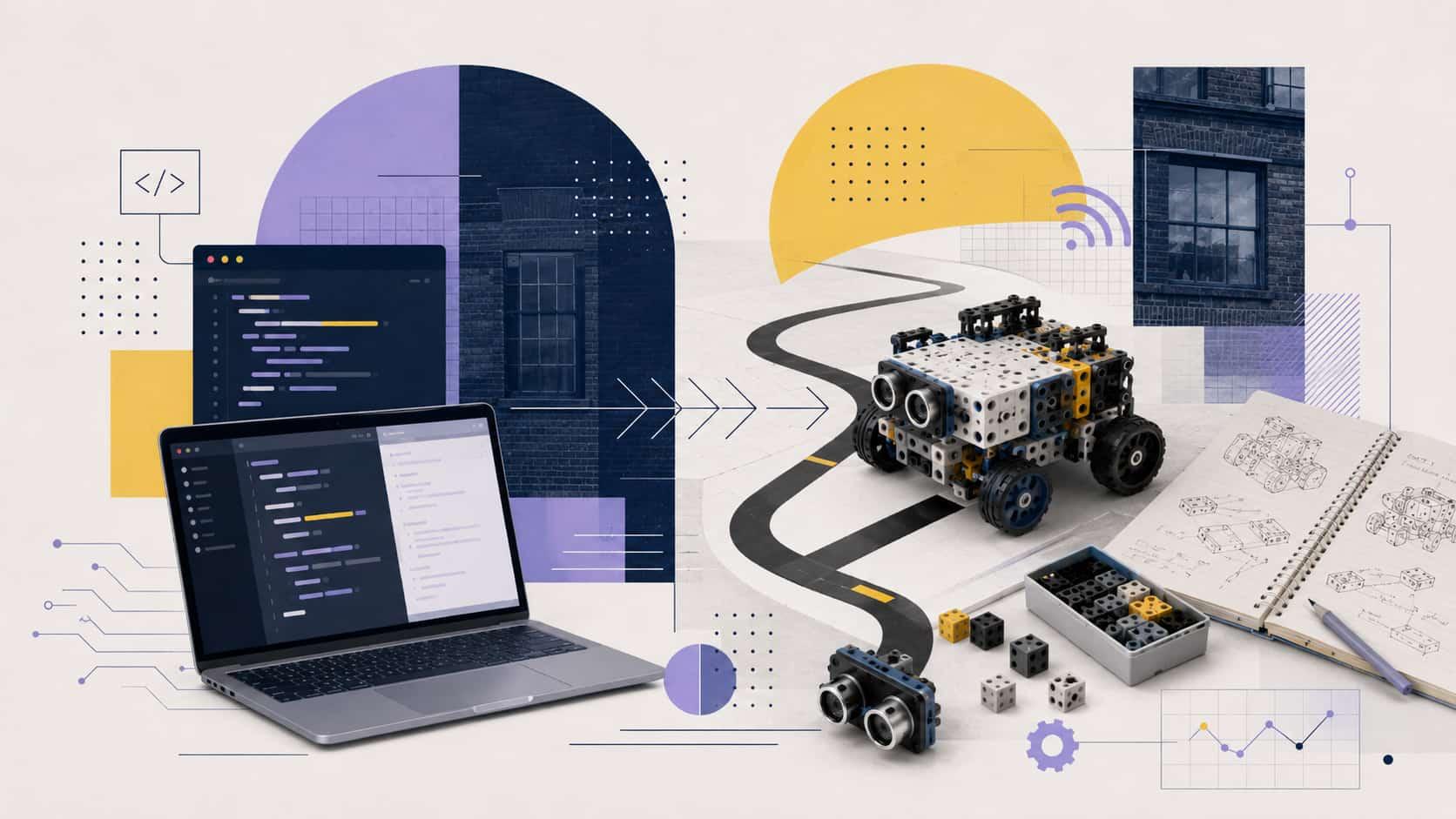
We get asked this a lot. The name suggests robots. The word "academy" suggests a classroom. The reality is somewhere in between and quite different from both.
Here is what an After-School Club session actually looks like at BotLab.
3:30pm — Arrivals and set-up
Students arrive, kit bags come out, and the room shifts quickly. There is no waiting around. Within five minutes of arrival, everyone is at a workstation with their robot in front of them. We don't do register then video then worksheet. We do immediate activity.
The first few minutes are usually spent picking up from where the last session ended. Students check their notes, we encourage brief written logs, not because we test them, but because "what did I try last time?" is the most useful question in engineering.
The challenge
Each half-term has a central challenge. We announce it at the start of the term: a specific task the robot needs to complete by the end of the final session. Line-following, obstacle avoidance, maze navigation, a timed delivery run.
This creates a genuine goal. Students are not completing exercises for an instructor, they are solving a problem that has a concrete success condition. The robot either completes the challenge or it does not.
Within each session, smaller tasks build toward the term challenge. These are set at the start of the hour, and students work through them at their own pace.
What the middle hour looks like
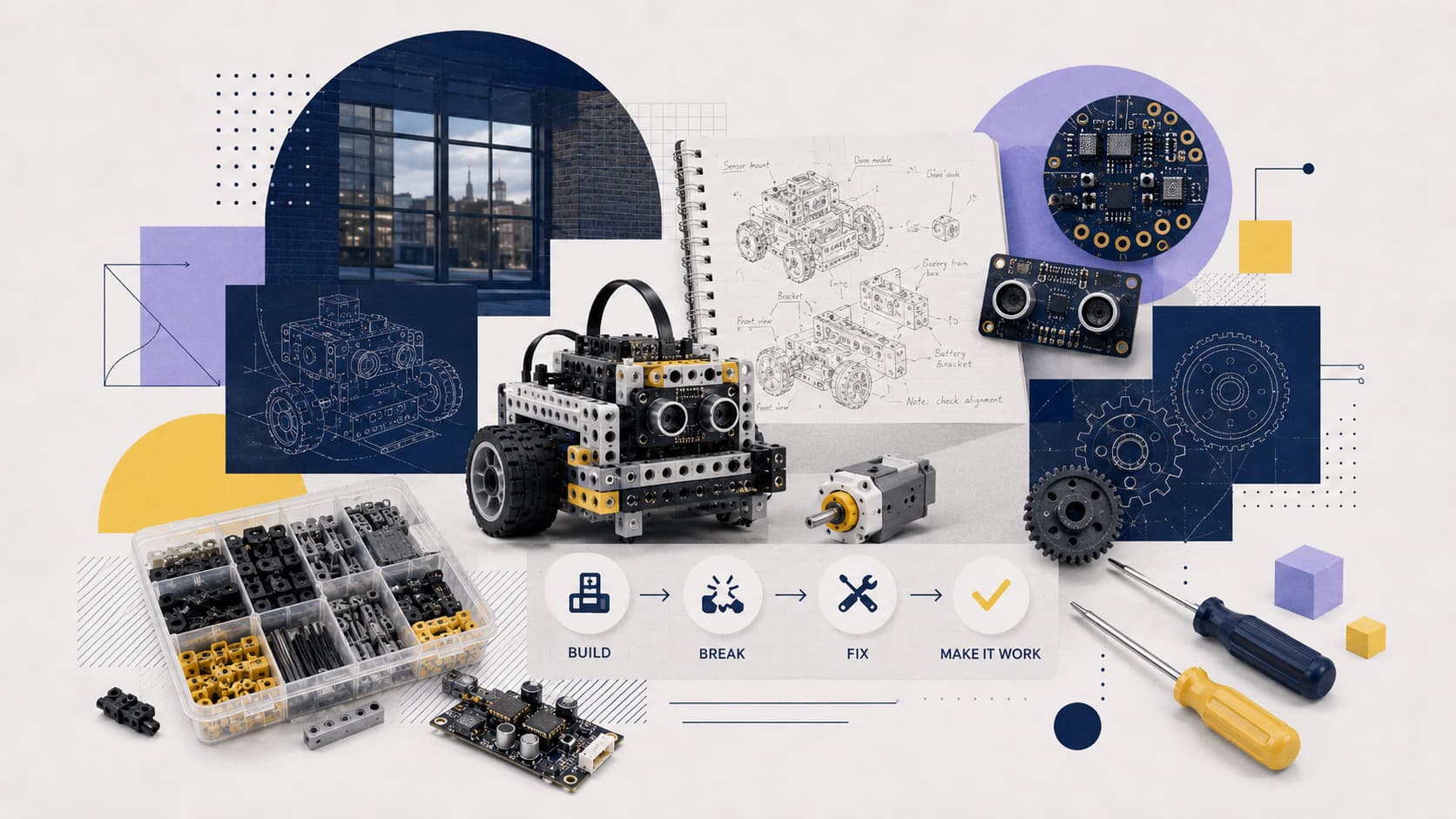
- Students work in pairs or individually, depending on the task
- Instructors circulate - asking questions rather than giving answers where possible
- When something stops working, the first question is always "what do you think is causing it?"
- Students who finish early are given extension problems, not asked to wait
- There is noise. There is movement. It does not look like a classroom.
We are deliberate about the question-first approach. It is slower in the short term. But students who diagnose their own problems develop a much better intuition for debugging — which is, in robotics and in software, the skill that matters most.
The last fifteen minutes
The session closes with a brief group check-in. Not a presentation - a quick round of "what did you figure out today?" and "what are you planning to try next time?". This takes about five minutes.
Then packing down. Students log their notes, robots go back in the kit bags, and the room resets.
What students take home
Not a worksheet. Not a certificate. A problem they are still thinking about.
The best sessions end with a student who has almost solved something. They pack away frustrated - but in the productive sense. They have a hypothesis. They know what they are going to try next week. That carries over.
That is the thing that screen-based education sometimes misses: a robot is still broken when you go home. The problem follows you. And for students who respond to that kind of challenge, it is exactly what they need.
Who is this for?
Students aged 11 to 18 who are curious about how things work. No prior coding or electronics experience is needed - we start from the assumption that everyone in the room is a beginner unless they tell us otherwise.
The sessions are small (eight to ten students maximum) and all instructors are DBS-checked. Full safeguarding details are available on request.
If you would like to find out more or reserve a place for your child, use the button on our programmes page. We will get back to you within one working day.